When you sign a building contract for your dream home or a commercial project, do you know who guarantees the safety of that structure? In Australia, the answer lies in a rigorous framework of national standards, most notably AS 4100 and AS/NZS 5131. To the average person, these might seem like technical jargon, but they are the final line of defense for your safety. A compliant structural steel system can mean the difference between fifty years of safety and structural failure within five.
AS 4100: The “Constitution” of Steel Design
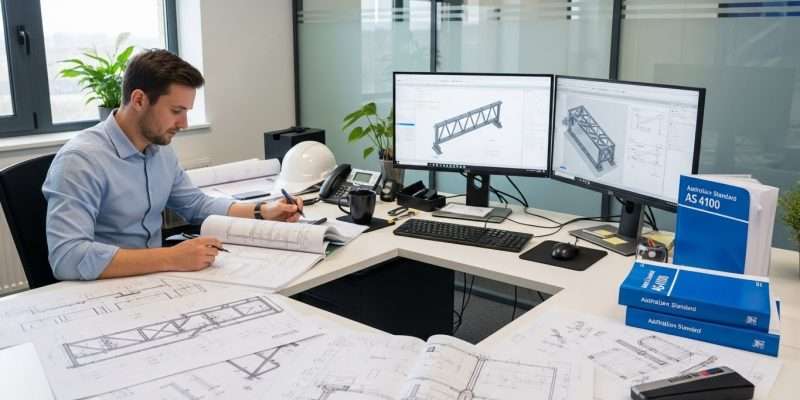
AS 4100 is the Australian Standard for steel structures design, with its latest major update in 2020 (AS 4100:2020). It dictates the fundamental principles every steel design must follow.
Limit States Design Method
Engineers must adhere to the “Limit States Design” philosophy, which focuses on two critical states:
- Ultimate Limit States (ULS): This ensures the building won’t collapse. It accounts for stability, strength, yielding, buckling, and fracture under extreme loads like storms or earthquakes.
- Serviceability Limit States (SLS): This ensures the building remains functional and comfortable—addressing issues like floor vibrations, deflection of beams affecting window operations, and long-term durability.
Section Classification and Buckling
AS 4100 classifies steel sections into compact, non-compact, and slender categories to prevent local buckling. It also provides precise scientific formulas to calculate lateral-torsional buckling and flexural buckling, ensuring that steel members don’t suddenly lose stability under pressure. Selecting the right structural steel engineer is crucial to ensure these calculations are performed accurately.
AS/NZS 5131: Ensuring Quality from Blueprint to Reality
While AS 4100 covers design, AS/NZS 5131 governs fabrication and erection.
Construction Categories (CC1 to CC4)
A risk-based management system categorizes structures based on the criticality of their components. CC2 is standard for commercial buildings, while CC3 and CC4 cover high-risk structures like skyscrapers or stadiums. This ensures that quality control is fit-for-purpose.
Welding and Corrosion Protection
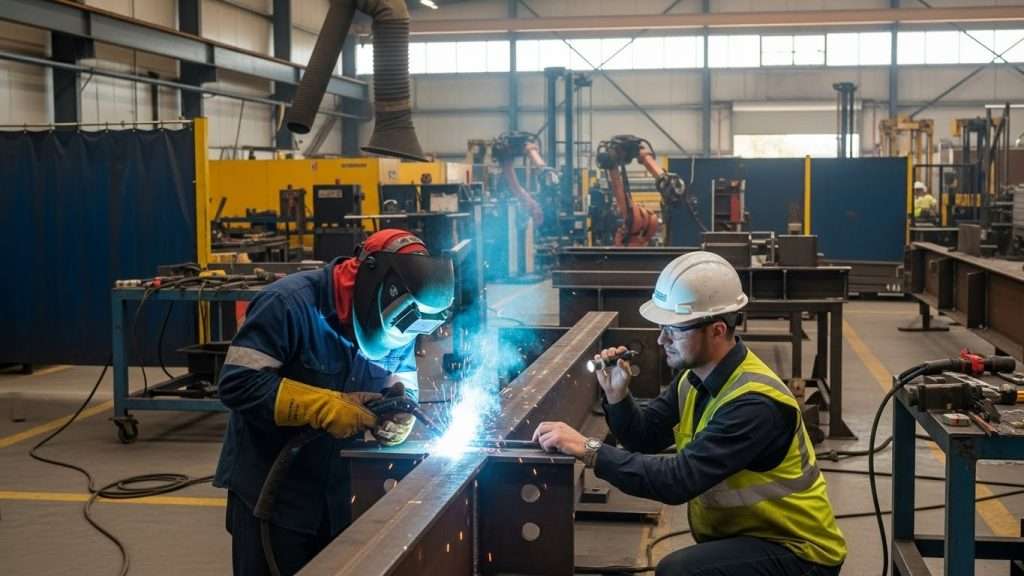
Welding is the most critical joint in any steel frame. AS/NZS 5131 requires certified welding procedures, qualified welders, and rigorous inspections (visual, magnetic, or ultrasonic testing). Furthermore, it dictates strict standards for surface preparation (e.g., Sa 2.5 sandblasting) and custom metal fabrication coatings like hot-dip galvanizing to prevent rust in Melbourne’s humid climate.
Why Compliance and Choice Matter
Non-compliance can lead to catastrophic collapses or premature corrosion. To ensure your project meets standards:
- Choose Registered Designers: Work with registered professional engineers familiar with the 2020 standards.
- Select Certified Fabricators: Work with a structural steel fabricator that follows AS/NZS 5131 and can provide material certificates and inspection reports.
- Retain Documentation: Keep mill certificates, weld certifications, and inspection records for future maintenance or resale.
Whether it’s residential structural steel for an open-plan kitchen, commercial structural steel for a retail hub, or industrial structural steel for heavy machinery, standards are not a “luxury”—they are the baseline.
At ACSteel, we pride ourselves on precision engineering that adheres strictly to AS 4100 and AS/NZS 5131. Contact us today to safeguard the foundation of your next project.